
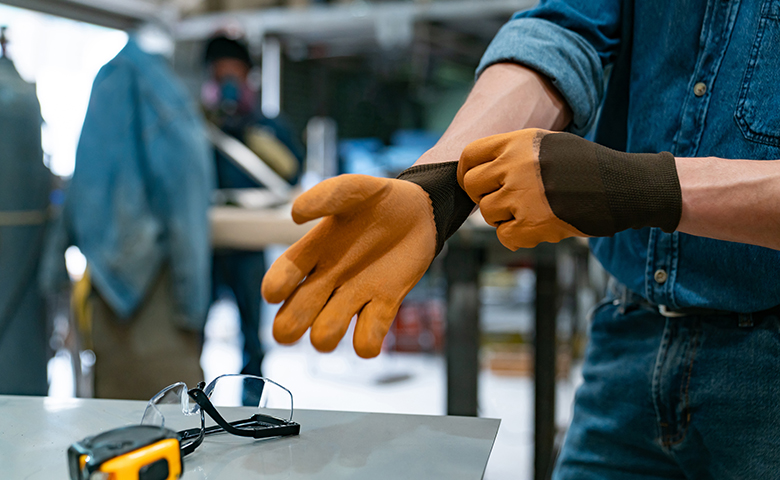
Safety gloves are an essential part of any hand safety program. But as a new article in Safety + Health magazine points out, preventing hand injuries requires a lot more than simply providing PPE. To that end, author Rhonda Piggee Johnson argues that safety culture can lend a helping hand when it comes to reducing injuries and keeping workers’ wrists, hands and fingers free from harm.
The article makes a compelling case that culture has a major influence on compliance. When workers understand that PPE is part of the expected behavior in the workplace—and when they see their peers consistently wearing hand protection—then they’re much more likely to wear gloves on a regular basis.
Another cultural factor is how an organization views the physical and mental states that affect people’s risk of injury. As Piggee Johnson explains, human factors can play a major role in hand safety:
“Rushing and distraction are two major mental states that cause people to put their hands in the line of fire. Does your organization have a safety culture that recognizes these human factors as notable safety problems? And is there an expectation among frontline leaders that they take steps to help mitigate the risks of human factors? The answers to these two questions are a major indicator of your safety culture’s ability to deal with some of the underlying drivers of hand-related incidents.”
Companies that have implemented a human factors management program will already understand that human factors are a serious issue, and its workers will have a set of skills that help them reduce the likelihood of hand injuries and other incidents. Conversely, organizations that haven’t yet begun to properly deal with human factors are likely leaving employees at greater risk than necessary.
The article concludes by pointing out that culture can also affect habit development. Strong safety habits, such as wearing PPE and avoiding putting hands in the line of fire, are an effective way to mitigate the possibility of workers injuring their hands, even when human factors like complacency strike.
Habit development is hard. It’s a high-effort and high-reward activity that requires a lot of cultural capital in terms of employee buy-in, supervisory support and time spent on practicing and building habits. Businesses with a strong workplace culture will likely have a much easier road to building hand-safety habits—but it’s worth noting that any company can take steps to improve habits, especially when it’s part of a more comprehensive initiative to combat complacency and deal with human factors.
The entire article is well worth a read. And if you’re looking for an even more in-depth investigation into improving hand safety, check out this comprehensive guide with insights and strategies to prevent hand injuries. In addition to practical advice, it includes interesting statistics and outlines how culture, human factors management and other approaches can help sustainably boost hand-related safety outcomes in the workplace.