
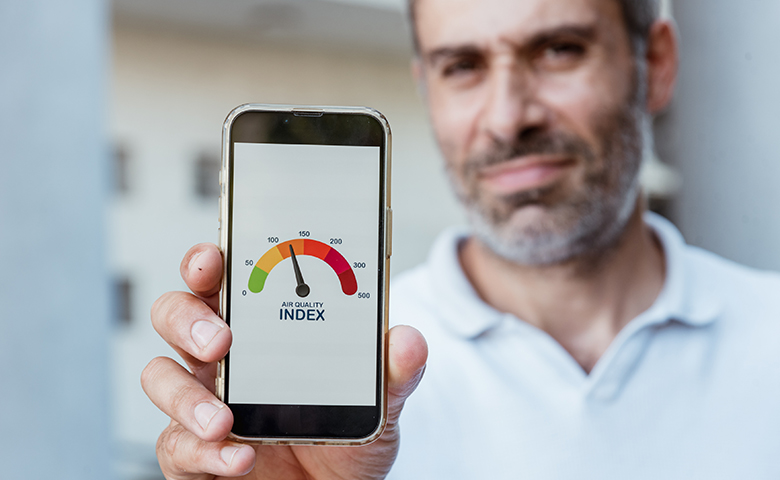
While we’re approaching the end of smog season, late-summer wildfire smoke patterns and shifting regional weather systems are still contributing to poor air quality. As wildfire activity continues to affect many parts of North America, it’s a good time to consider how air quality affects workers in your facility.
Most people don’t realize that human factors can play a part in downgrading risk response to air quality—because unless there is visible smoke in the sky, people often don’t think about the air quality. That’s a classic case of complacency. And as wildfire smoke and poor air quality are becoming a more common part of summer thanks to climate change, this type of complacency is going to increasingly become a challenge for safety professionals.
The best approach for your facility is to be aware of the risks and prepare for these conditions each year. Air quality is frequently included in daily weather reports, weather apps, and government forecasts—working on the habit of checking the air quality report is a good start.
Employees who work outdoors or travel between job sites may face a higher risk of exposure, but even commuting to work can result in enough exposure to pose a health risk when air quality is poor. For workers with pre-existing health conditions that are exacerbated by poor air quality, the impact may be not only physical but psychological as well. Concern about respiratory symptoms worsening, medication needs, missed work, or long-term health consequences or complications can increase stress and worry. The gradual effects of climate change on mental health, known as eco-anxiety, are also a challenge.
Recognizing the physical effects of poor air quality is an important part of managing the broader human factors risks and psychological effects associated with poor air quality. Exposure to poor air quality may cause eye, nose, and throat irritation, coughing or shortness of breath, headaches or dizziness, worsening of asthma, heart, or other respiratory conditions, and unusual tiredness or fatigue. As this list suggests, low air quality is not only a respiratory hazard, and it can affect the human factors that influence worker performance and decision making.
The physical effects may contribute to fatigue, reduced alertness, concentration, and overall situational awareness. And those symptoms can, in turn, increase the risk of multiple human factors. When tasks require more effort than usual—which is often how people feel when they’re fatigued—they may become frustrated more easily. Feeling physically uncomfortable can reduce a person’s tolerance for stress and create frustration for those experiencing irritation or discomfort. In some cases, workers may also feel tempted to rush to complete tasks more quickly or take shortcuts to limit their exposure.
Anticipating both hazards and human factors before a task begins is one of the most effective ways to prevent incidents and critical errors.
Here is a quick checklist you can use to strengthen your facility’s approach to managing the effects of poor air quality on workers:
| ▢ | Make a habit of checking the air quality report before going outside. |
| ▢ | Include information about air quality in daily startup meetings or toolbox talks. |
| ▢ | Consider additional PPE if the levels are acceptable to be working outside, like a respirator or goggles/protective eyewear. |
| ▢ | Encourage workers to report symptoms such as coughing, throat irritation, headaches, dizziness, unusual fatigue, or difficulty concentrating. |
| ▢ | Limit outdoor exposure (by reducing or postponing outdoor work) if the air quality index reaches unhealthy levels. |
| ▢ | Increase the number of breaks and ensure there’s a designated clean-air or filtered area to take breaks. |
| ▢ | Use the recycle/recirculation feature in vehicles, which blocks outside vents, so smog, dust, pollen, and bad air stay outside. |
| ▢ | Inside the workplace (or home), adjust the A/C unit to recycle the air instead of pulling in air from the outside. |
Understanding the broad effects of poor air quality can help people recognize when it may be creating additional human-factor risks. Discuss these preventative measures in safety briefings or toolbox talks to identify potential impacts and take steps to implement precautions that can reduce people’s exposure, support workers’ well-being, and help them to stay focused when air quality is poor.