
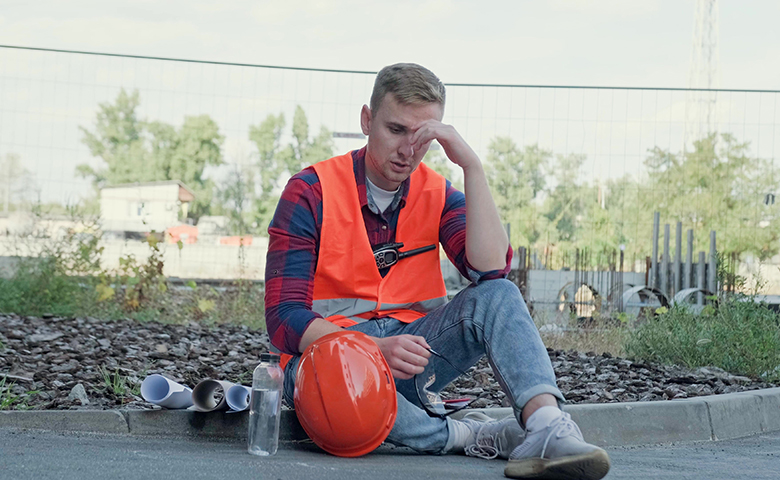
Have you ever wondered why people feel more tired as summer transitions into the fall?
Fall fatigue is a real thing that people experience, even though it’s not medically documented. People often describe feeling unusually tired, lethargic, and low on energy as summer transitions into autumn. Fall fatigue is not the same as seasonal affective disorder (SAD), even though they both occur when the seasons change and daylight fades.
While it starts getting noticeably darker earlier right after the summer solstice in late June, by the first day of fall (autumnal equinox) people really begin noticing the loss of daylight. According to the Farmer’s Almanac, the autumnal equinox is the precise astronomical moment when the center of the sun crosses the celestial equator. That means that, as the Almanac puts it, the “days become shorter than nights as the Sun continues to rise later and nightfall arrives earlier.”
The sudden darkness also affects people’s circadian rhythm (the body’s internal clock). Light and darkness play a big part in regulating the biological clock by signaling when to sleep and when to be awake. That is to say, darkness makes people feel more tired sooner. The lack of sunlight can also disrupt sleep patterns, as less sun exposure means lower vitamin D levels, which helps the body build serotonin and convert it into melatonin (the hormone that makes someone sleepy).
Adults need approximately eight hours of sleep every night. In the fall, when people ignore their body’s signal to want to sleep more, it may cause them to become alert later in the evening, getting a “second wind,” which makes it harder to fall asleep when they finally go to bed. That can result in a shorter or more disrupted night’s sleep. And losing even an hour of sleep can cause people to incur sleep debt.
Lack of sleep significantly reduces productivity and negatively affects almost every other performance factor, including your physical and mental states. In the workplace, fatigue reduces employee performance because it diminishes their ability to make safe decisions, shortens their attention span, impairs memory, and slows reaction time and accuracy. That’s because every aspect of human biology is influenced by insufficient sleep: cognitive functions, reaction time, memory, and awareness. Essentially, fatigue makes people impaired.
This time of year it’s critical to be hyper-focused on safe driving because fatigue is most apparent—and dangerous—behind the wheel. With school back in session, there’s an influx of pedestrians, more street traffic, slowdowns caused by bus pick-ups/drop-offs, increased bicycle riding, and excited kids not paying attention to where they’re walking. Children can dart into the road from between parked cars, often appearing with little warning and leaving drivers little time to react.
So what can safety professionals do in the workplace to help manage people’s fatigue? Here are a few measures to help workers recognize and deal with fatigue issues before they affect safety or performance.
Sleep talk
Communication is key. Fatigue becomes more important when people can see how it affects everyday decisions. Studies have shown that fatigue-related symptoms in cognitive and physiological functioning are similar to impairments due to alcohol intoxication. Include a brief fatigue reminder in toolbox talks, pre-job briefings, and safety meetings. This includes encouraging workers to speak up if they’re too fatigued to perform a task.
Get a move on
People who regularly engage in low-intensity exercise were found to increase their energy levels by 20 percent and decrease their fatigue by 65 percent. You don’t need to offer an expensive gym membership to achieve this one. Instead, start a walking group on breaks. Getting outside during daylight hours is another important part of fighting fatigue. Walking can be helpful in lowering fatigue levels (30 minutes is ideal). Don’t sweat it if you can’t find a 30-minute block to schedule a walk; break it up into ten- or fifteen-minute walks two or three times a day.
Break it down
Organizations can minimize the impacts of fatigue by planning a production schedule to account for the times when workers are more likely to be more sleep-deprived. And strategically timed breaks can boost overall performance. Build a culture where employees can speak up when they’re feeling tired. Allow for a water or stretch break to give employees a quick reset from their tasks.
Prepare for daylight saving time
“Fall back, spring forward” means you gain an extra hour in November. But you should still prepare workers for this time change. It’s important to take advantage of that extra hour, but here’s where the warning comes in: people often overplan for that extra hour. And because it’s only an hour, this overplanning for the extra time often impacts sleep. People should plan to go to bed at the same time and wake up at the same time for the time change; i.e., if they normally go to bed at 11 pm and wake up at 7 am, they should still do that the night the clocks change, gaining an extra hour of sleep.
Keep human factors in mind
Fatigue is a common human factor that leads to errors. And it’s often impacted by complacency, which compounds the risk of injury. Since being tired is a regular, everyday occurrence for most people, the risks of fatigue is often downplayed. There’s a common misconception that fatigue can be overcome. By self-triggering on fatigue, workers can assess if they’re capable of performing tasks effectively, if they need to take a break, or if they should allow someone else to perform the task if it’s a matter of safety. Fatigue can also make people more susceptible to other human factors like rushing or frustration, which additionally increases the likelihood of a critical error.
Human factors training helps employees understand how fatigue can affect their safety and performance, recognize when they or someone else may be fatigued, and learn what they can do to manage it before it leads to an error or injury. While you can’t force employees to go to bed at a reasonable hour, you can prepare them to assess their own sleep patterns and help them recognize the need for an optimal sleep schedule.