
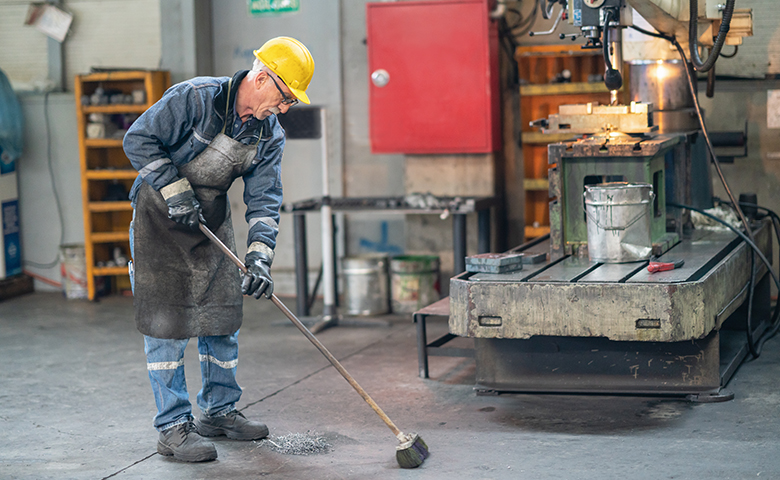
April is here, bringing brighter days, warmer weather and a burst of springtime energy. The time for hibernation is over, and for many workplaces, it’s the perfect opportunity to reset, reorganize and refocus on safety through spring cleaning. While often seen as a routine or cosmetic task, workplace cleaning plays a critical role in hazard prevention, long-term health and overall operational performance.
Here are some of the top reasons to take spring cleaning seriously from a safety perspective.
Better hazard reduction
A cluttered workspace is a breeding ground for hazards. In industrial settings, construction sites, and warehouses and manufacturing facilities, even small amounts of disorganization can lead to serious incidents. Loose materials like scrap metal or wood, packaging, and tools and cords increase the risk of slips, trips and falls—one of the most common causes of workplace injuries.
Accumulated waste—such as cardboard, paper or oily rags can—can also significantly increase fire risk. These materials are often overlooked in day-to-day operations but may quickly become dangerous if left unchecked. Spring cleaning provides an opportunity to remove these hazards, inspect storage practices and reinforce proper disposal procedures. By reducing the amount of litter, rubbish and junk in a working space, you’re actively eliminating risks before they lead to injuries.
Better environmental health
Not all hazards are immediately visible. Poor housekeeping can allow harmful substances to build up over time, creating long-term health risks for workers. Dust from materials like silica, wood or drywall can accumulate in the air and on surfaces, potentially leading to respiratory issues or chronic and incurable illness if exposure is prolonged.
The same goes for chemical and oil residue, which may linger unnoticed in corners, on equipment or in ventilation systems. In some cases, biological hazards like mold can be present in workspaces too. Very few of these pose an immediate danger—though allergens can cause workers to be distracted, increasing their risk of error—but long-term exposure can lead to serious health problems.
Spring cleaning is a chance to go beyond surface-level tidying and address these hidden dangers. Deep cleaning, proper ventilation checks and safe handling of hazardous materials can significantly improve air quality and reduce exposure risks. A cleaner environment supports long-term worker wellbeing.
Better visibility
Disorganization doesn’t just create new hazards—it also camouflages existing threats. Visual noise makes it harder for workers to identify risks quickly. A loose blade in a messy drawer or a damaged tool buried under other equipment may go unnoticed until it’s too late.
And the door swings both ways: clutter makes it difficult to see important elements of a safety system. Safety signage, emergency exits, fire extinguishers and control panels can become partially or fully obstructed in a messy environment, delaying response times in critical situations. Even something as simple as a disorganized first-aid kit or an obstructed AED can slow down response during an emergency, when every second counts.
Spring cleaning helps clear important sightlines and restores logic to complex spaces. When tools, equipment and safety resources are stored properly and consistently, workers can find what they need quickly and identify hazards more easily. In high-risk environments, that clarity can make a significant difference between going home at the end of the day or clocking out early for an ambulance ride.
Better morale
Cleanliness influences how people feel and behave at work. Human factors play a major role in workplace safety, and morale is a key part of that equation.
A clean, organized environment fosters a sense of pride and professionalism. Workers are more likely to take ownership of their tasks and surroundings when they feel their workplace is well-maintained. On the other hand, a messy or neglected space can lead to frustration, disengagement or even complacency—conditions that increase the likelihood of errors.
People feel less stressed in environments that are orderly and presentable. That confidence can translate into better communication, stronger teamwork and more proactive safety behaviors. Spring cleaning can act as a reset, reinforcing shared standards and encouraging everyone to contribute to a safer workplace culture.
Better security
In today’s workplaces, safety extends beyond physical hazards to include digital risks. Many work environments now rely on digital systems for operations, communication and record-keeping. With this shift comes the need for better data security practices.
A cluttered workspace can increase the risk of sensitive information being exposed. Passwords written on paper, unlocked devices left unattended or misplaced documents can all lead to security breaches. And while these risks may seem less immediate than physical hazards, their consequences can be just as serious. A cyber attack in a manufacturing facility can cause machines to malfunction in dangerous ways, and even stolen data has a safety component—a significant portion of identity theft victims experience suicidal thoughts.
Spring cleaning offers a chance to bolster against digital threats by organizing workstations, securing documents and reinforcing best practices for device use. Ensuring that digital tools are properly managed and protected is an increasingly important part of overall workplace safety.
By reducing hazards, addressing long-term health risks, improving visibility, boosting morale and strengthening security, a clean workplace supports safer behaviors and better outcomes across the board. This April, take the opportunity to go beyond routine cleaning. Use it as a chance to evaluate your environment, reset expectations and build habits that last throughout the year. When cleanliness becomes part of everyday operations—not just a once-annual effort—you create a workplace where hazards are easier to spot, risks are better managed and people can perform at their best.