
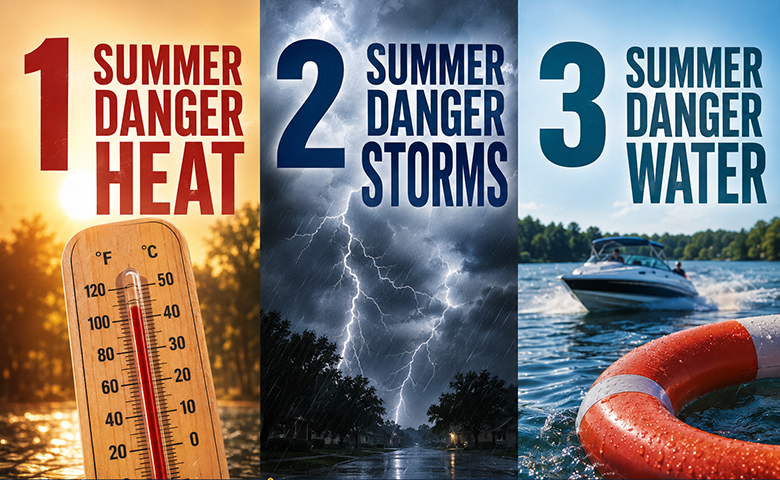
Summer is well underway, and for a lot of people that means relaxation and vacation. But risk never takes a holiday, and just like its seasonal counterparts, the July to September timeframe is filled with its share of unique dangers. From soaring temperatures and severe weather to weekends spent on the water, there are plenty of hazards that can catch people off guard during the hottest months of the year. Thankfully, by understanding three common summer danger elements—and the human factors that often turn ordinary situations into incidents—you can help keep yourself, your coworkers and your family safe all season long.
Summer Danger Element 1: Heat
Sure, it’s obvious: summer is hot. But heat presents risks that extend well beyond simple discomfort. Employees working outdoors or in hot indoor environments face an increased risk of dehydration, fatigue and heat-related illnesses such as heat rash, heat cramps, heat exhaustion and life-threatening heat stroke. These conditions can develop quickly, especially when workers fail to stay hydrated or ignore the early warning signs. Left untreated, even relatively minor heat illnesses can progress into serious medical emergencies.
But the hidden danger of heat is the way it affects human performance long before someone experiences a medical emergency. As body temperature rises, fatigue sets in more quickly, concentration declines and people become more susceptible to distraction, frustration and impulsive decision-making. A worker who is mentally drained by the heat is more likely to miss hazards, overlook symptoms in themselves or a coworker, or convince themselves they can “push through” just a little longer. That’s why hydration, shaded rest breaks, proper clothing and acclimatization aren’t simply ways to prevent heat stroke—they’re also ways to maintain alertness and good decision-making throughout the workday. Teaching workers how heat influences both the body and the brain helps them recognize when it’s time to cool down before a minor issue becomes a serious incident.
Summer Danger Element 2: Storms
In the modern climate, summer weather can change in an instant. Severe thunderstorms bring lightning, damaging winds, hail and torrential rain that reduce visibility, create slick roads and produce flash flooding. Tornadoes can develop with little warning, generating destructive winds capable of collapsing buildings and overturning vehicles, while hurricanes add prolonged threats through flooding, storm surge, extended power outages and widespread structural damage. Whether at work, driving home or spending time outdoors, severe weather requires people to understand weather watches and warnings, know where to seek shelter and be prepared to change their plans when conditions deteriorate.
Severe weather can be even more dangerous when you add in the human element. Human factors often determine whether people respond safely to summer storms. Familiarity with seasonal weather can create complacency, which could cause workers to underestimate changing conditions because previous storms “weren’t that bad.” Fatigue, distraction, rushing and overconfidence can further delay good decisions, whether that’s continuing to work outdoors, attempting to drive through flooded roads or waiting too long before seeking shelter. Helping employees recognize these patterns encourages them to respond to weather alerts earlier, follow emergency plans without hesitation and avoid letting routine experience override sound judgment.
Summer Danger Element 3: Water
For many people, summer means spending weekends at the beach, by the pool or out on the lake. While these activities offer welcome relief from the heat, they also introduce hazards that go beyond the more obvious risk of drowning (though that is still a massive risk). Heat stress, severe sunburn, prolonged UV exposure, skin cancer, boating incidents and even unexpected situations involving family pets can turn a relaxing afternoon into an emergency. Water reflects ultraviolet rays, which increases sun exposure, and children, pets and recreational activities create distractions that make it easier to overlook developing hazards. Simple precautions such as wearing life jackets, supervising children and pets, staying hydrated and reapplying sunscreen can significantly reduce these risks.
Many of these incidents are driven less by a lack of knowledge than by complacency. Many people have spent years around water without experiencing a serious emergency, and that makes it easy for them to believe they don’t need a life jacket, or that one afternoon without sunscreen won’t matter, or that nothing dangerous will happen near the pool if they leave young ones or pets unattended for just a moment. This false sense of security can make people feel like they can take shortcuts that could have life-changing consequences. By helping workers recognize how familiarity influences their decisions around water, safety professionals can reinforce habits that protect employees and their families away from work while strengthening the same awareness and risk-recognition skills that improve workplace safety. Whether it’s recognizing when fatigue is affecting judgment, resisting complacency or paying closer attention to changing conditions, the human factors awareness that keeps people safe around water when they’re off the clock can also help prevent incidents on the job.
By understanding the hazards associated with heat, severe weather and water, while also recognizing how human factors influence everyday decisions, workers can make safer choices wherever the season takes them. Sharing these lessons through regular toolbox talks and everyday safety conversations helps build awareness that extends beyond the workplace, protecting employees and their loved ones throughout the summer months.